

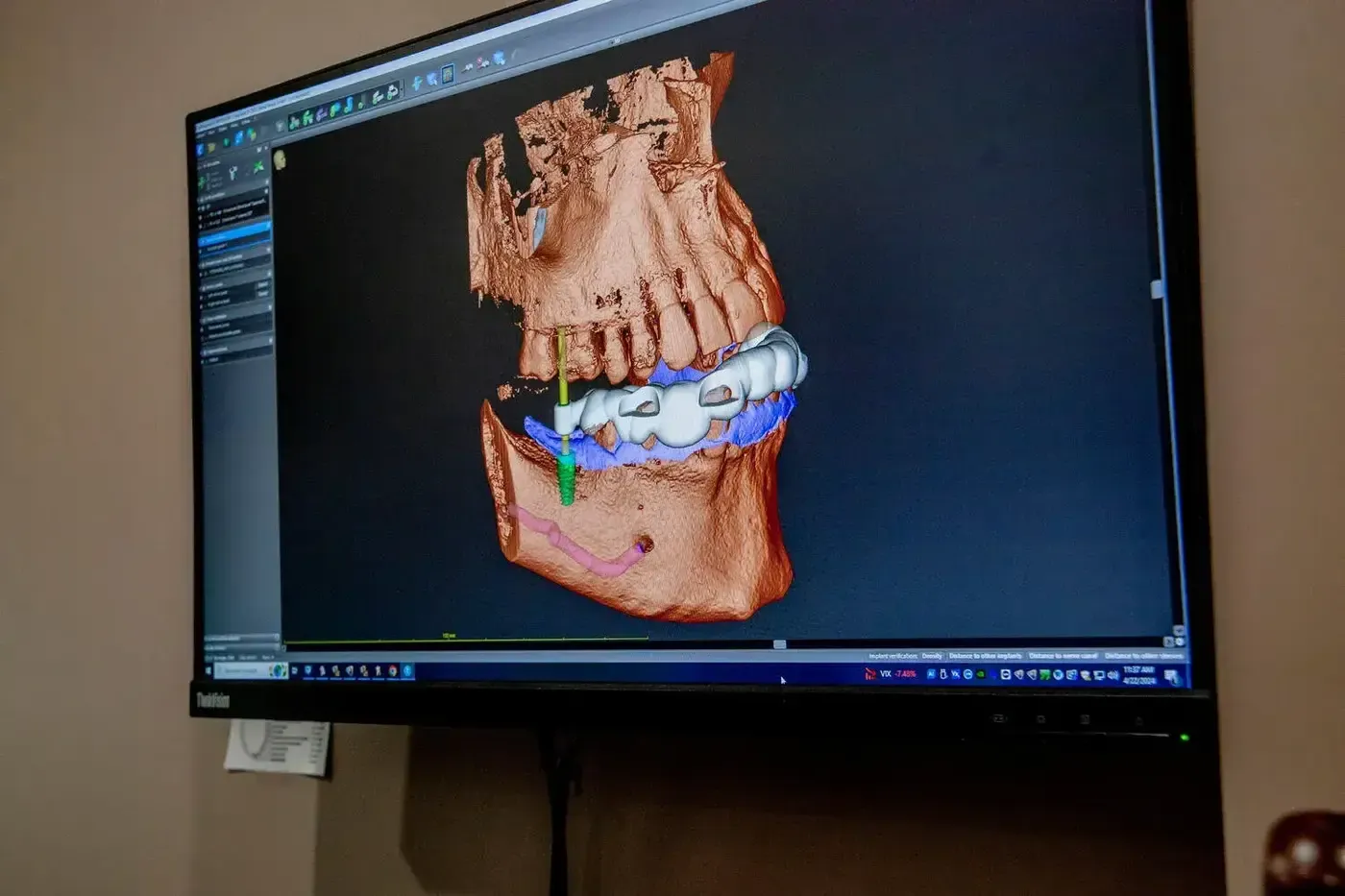
How a dental implant works
A dental implant is a small titanium post placed in the jawbone where a tooth root used to be. Over the following months the bone bonds to the implant, a process called osseointegration. Once it has healed, a crown, bridge or full set of teeth is attached on top. The implant then works much like a natural root: it supports chewing and speaking and helps keep the jawbone from shrinking.
Your options
Single implant
One implant and one crown replace one missing tooth without touching the teeth beside it.
Implant bridge
A few implants support a fixed bridge when several teeth in a row are missing.
All-on-4 style full arch
A full set of fixed teeth on a small number of implants, for patients missing most or all of their teeth.
Why one office matters
At many practices, a surgeon places the implant and a different dentist makes the tooth. Here, both happen in the same building. We plan the final tooth first on a CBCT 3D scan, place the implant where that tooth needs it, and make the restoration in our in-house lab. One team owns the result from start to finish.
The steps
Consultation and 3D scan
An exam and CBCT 3D imaging show your bone, nerves and sinuses so we can plan precisely.
Preparing the site, if needed
Some patients need a tooth removed or bone added before an implant can go in.
Placing the implant
The implant is placed with local anesthetic, and sedation if you would like it.
Healing
The bone bonds to the implant, usually over a few months.
Your new tooth
We attach the crown, bridge or full-arch teeth made in our lab.
Implants compared with bridges and dentures
Bridges rely on the teeth next to the gap for support, and removable dentures rest on the gums, which can make them shift when you eat. Implants are anchored in bone, do not depend on neighboring teeth, and feel closer to natural teeth. With good care they can last for many years.
Caring for your implants
Treat implants like natural teeth: brush twice a day, clean between them every day, and keep up regular cleanings and checkups so the gums around them stay healthy.