

Signs a full-mouth approach makes sense
- Teeth that look short, flat or worn down, often from grinding or acid wear
- Several old fillings or crowns failing around the same time
- Missing teeth that have let others drift or tip
- Jaw pain, headaches or a bite that no longer feels right
- A smile you avoid showing because of how your teeth look together
Why we start with the cause
Teeth tell a story. Worn edges, cracks and broken fillings usually have a reason behind them, such as grinding, a bite that does not fit together well, or gum problems. If we only replace what is broken, the same forces break the new work. Dr. Lindauer's approach is to find the root cause first, so the result is stronger and lasts longer.
How we plan your treatment
Comprehensive exam
A full look at your teeth, gums, jaw joints and bite, plus x-rays and photos.
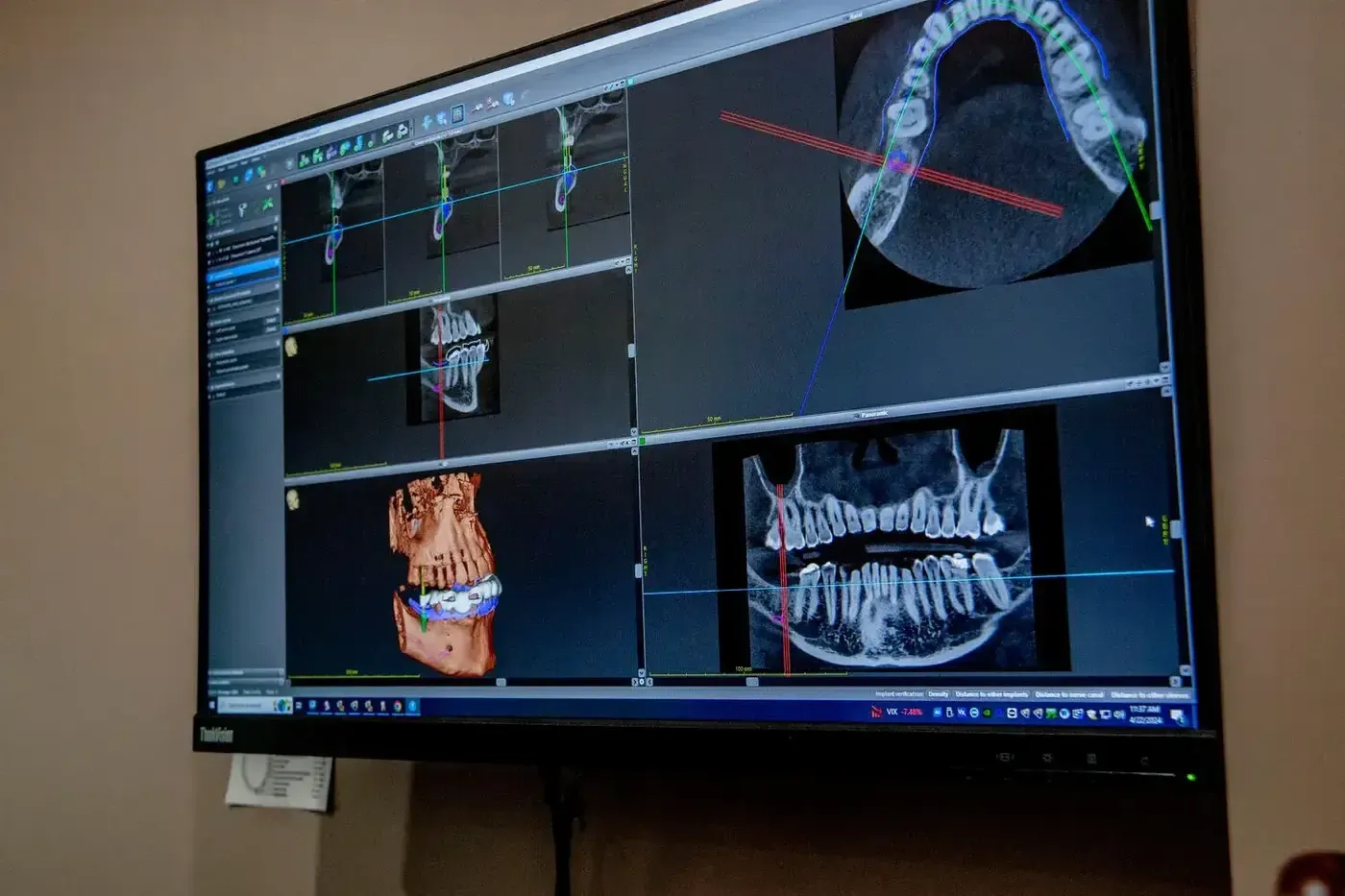
3D imaging and records
CBCT 3D imaging shows bone, roots and nerves, which matters when implants or surgery are part of the plan.
Design
We plan how your teeth should look and how they should meet, and talk it through with you before anything starts.
Phased treatment
Most cases happen in planned phases. Our in-house lab makes crowns and models here, so we are not waiting on an outside lab between steps.
What full-mouth rehabilitation can include
Every plan is different. Depending on your needs it may combine crowns, dental implants, bridges, porcelain veneers, gum treatment, Invisalignto move teeth into a better position first, and therapeutic Botox for grinding or jaw pain.
Planning around life in a mountain town
Many of our full-mouth patients are second-home owners. Because large cases happen in phases, we can usually line up the major steps with the weeks you are in Breckenridge. IV sedation can also let us do more in one appointment.